📄 Digital book in PDF · read it on your phone or print it
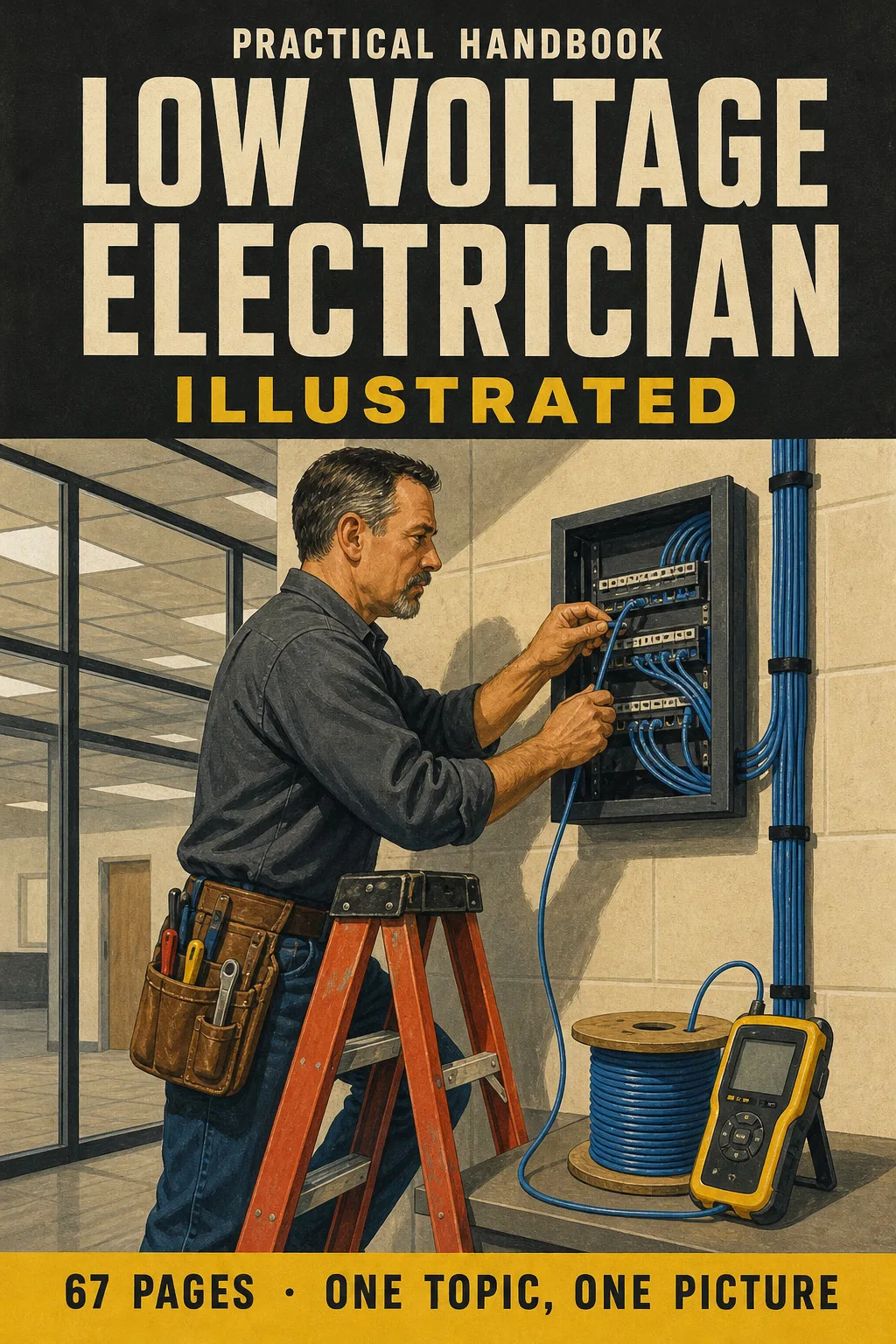
Circuit classes, power limits, cable ratings, fire alarm, structured cabling, access control, CCTV and PoE, voltage drop and battery math. Each topic gets its own page: the drawing first, then what you need to remember. 67 illustrated pages.
🔒 Secure checkout · PDF by email · 30-day guarantee
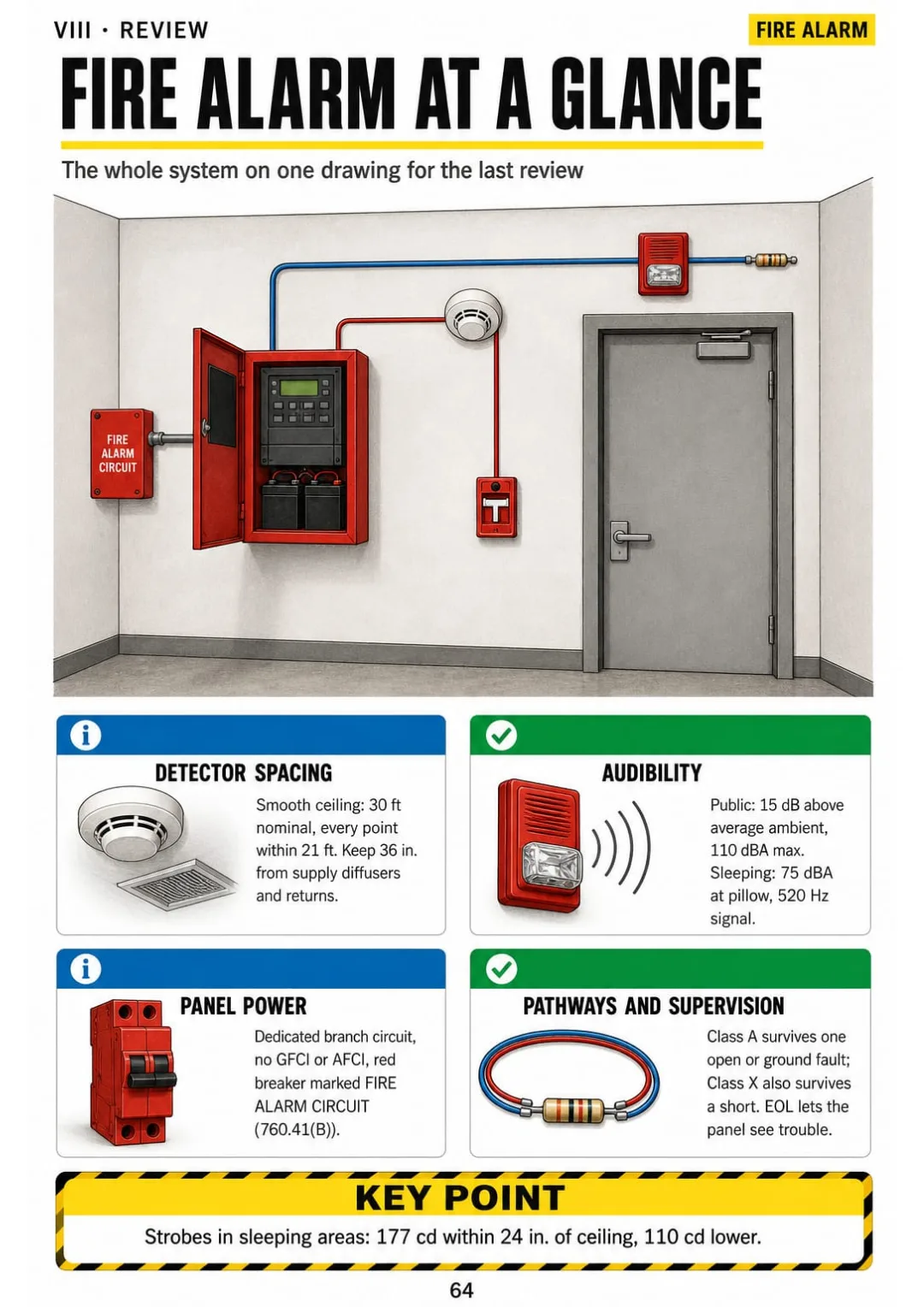
Every page has one big drawing and a box with the numbers and code rules you need to know:


Swipe to see more →
These are real pages from the book. The table of contents is the full one: 8 parts and 63 topics.
It's late, you're at the kitchen table with the code book open, and a practice question asks: Class 1, 2 or 3? You wire these circuits every week, and you still stall.
The code gives it to you in paragraphs: power-limited, remote-control, signaling, fire risk, shock risk, plus exceptions that send you to other sections. Three classes explained only in words end up blurring into one.

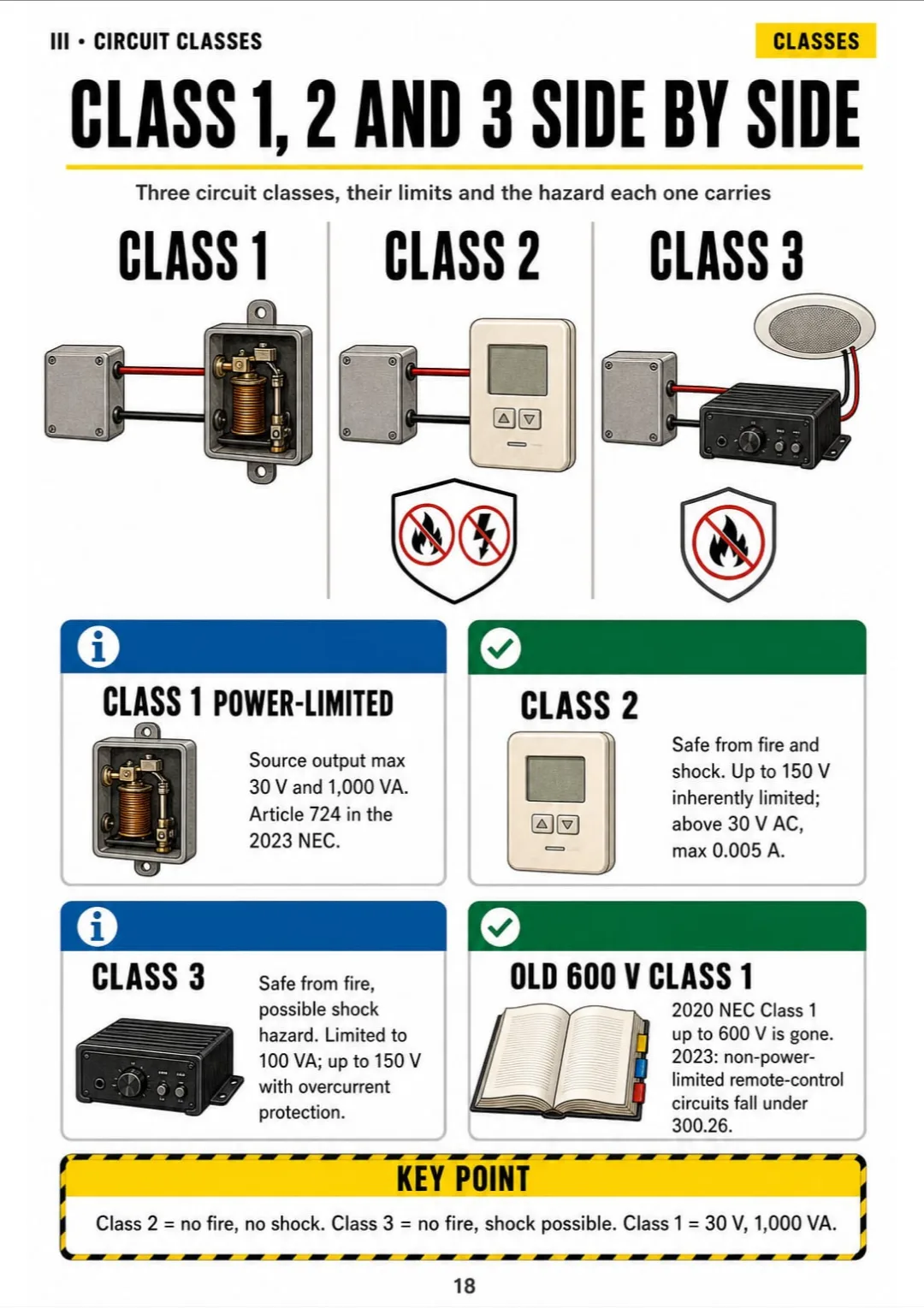
In this book, Class 1, 2 and 3 sit side by side on one page. Each one is drawn with its source, its cable and its limit: Class 1 power-limited at 30 V and 1,000 VA, Class 2 safe from fire and shock, Class 3 up to 100 VA with shock possible.
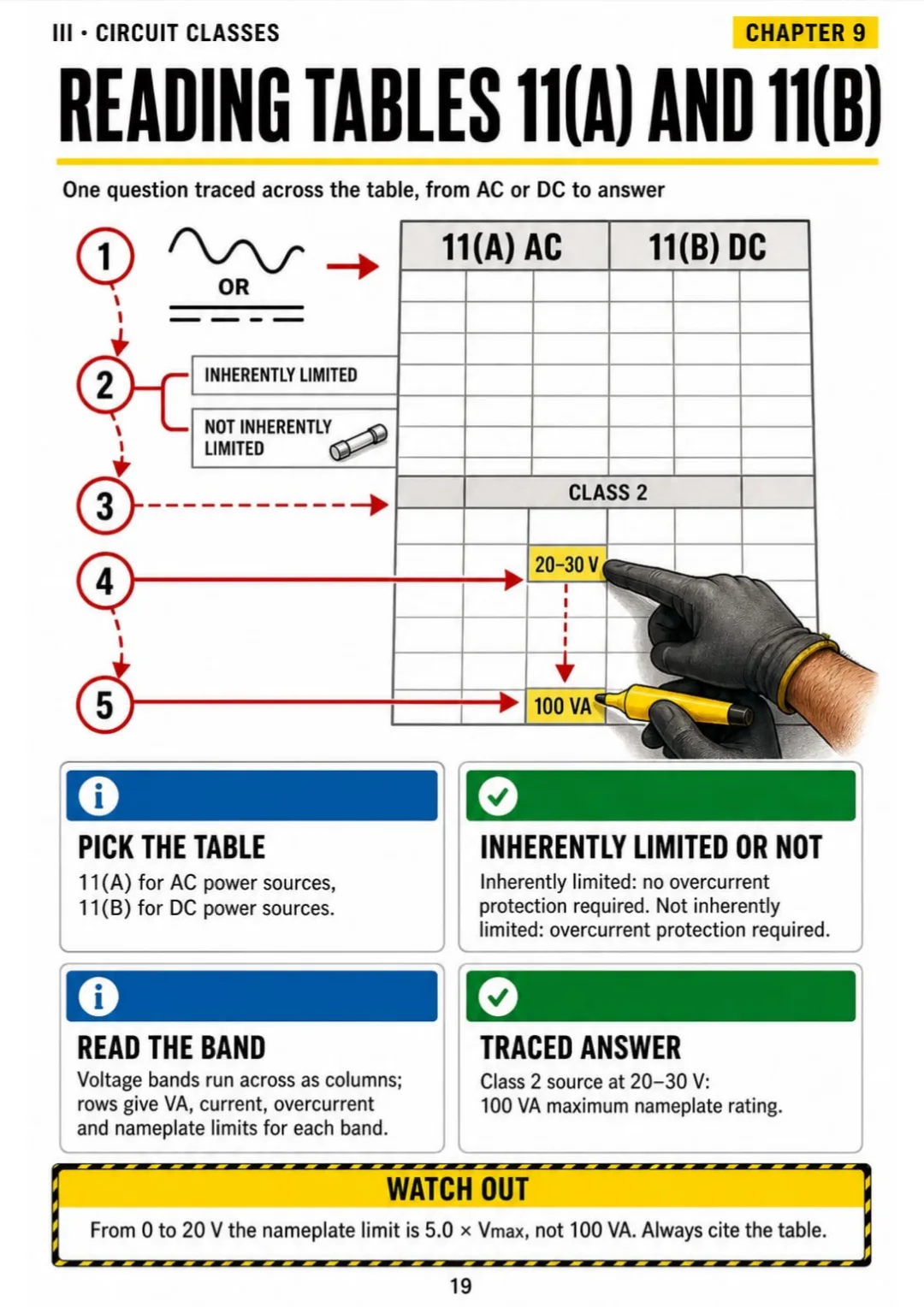
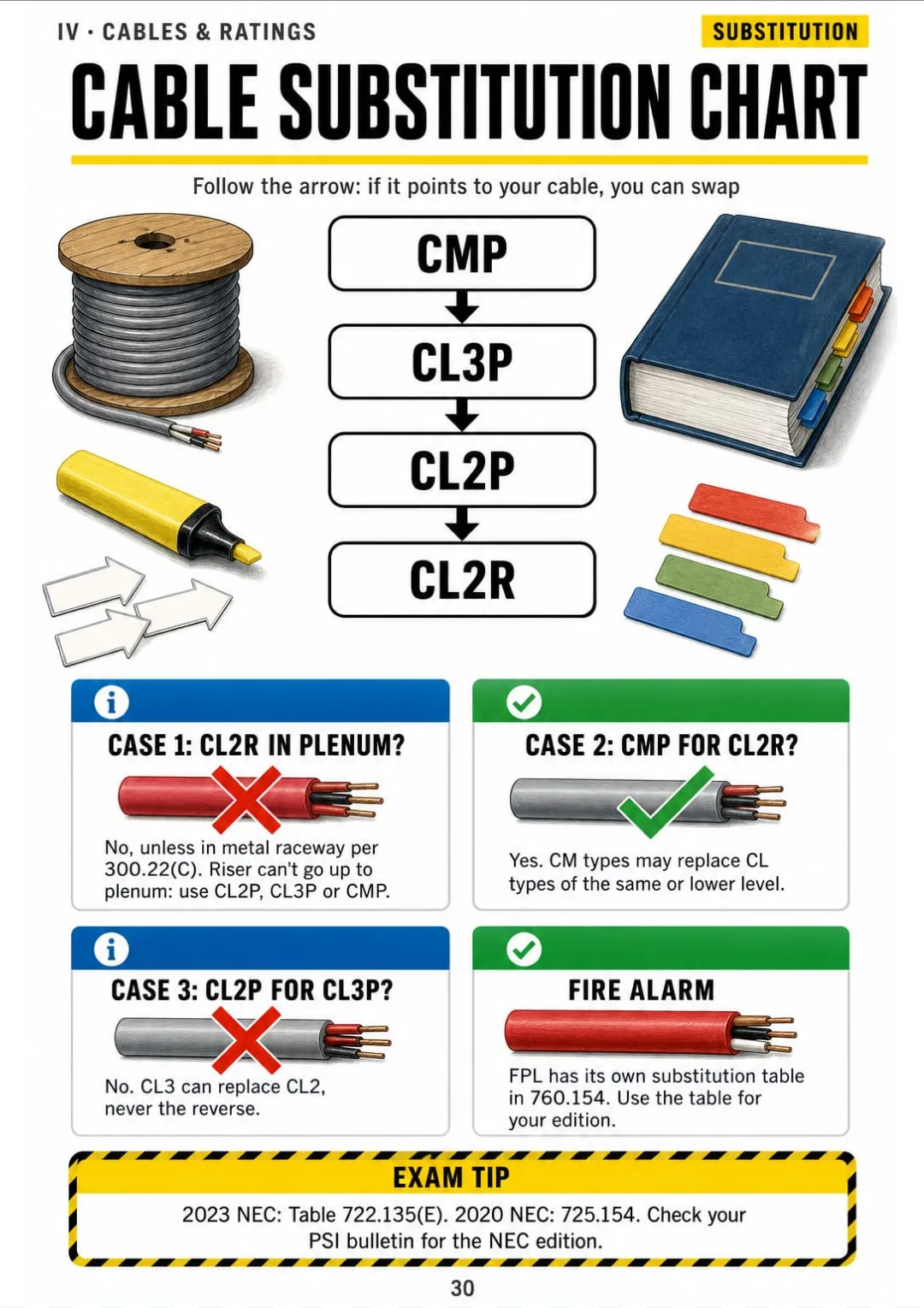
The same goes for Tables 11(A) and 11(B), cable substitution, PLFA vs NPLFA, the 2-inch rule and PoE wattage: each one has its own page.
You see where each circuit fits, and you answer without flipping back to the code book.

The exam and the code map, electrical basics, circuit classes and power limits, cables and pathways, fire alarm, structured cabling, security, access control, CCTV and audio, and a final review for exam day: 67 pages, all illustrated.
Think of it this way:
You're on a job and the GC asks if the cable already running through the return-air ceiling can stay. You need to know its rating, right now.
You open the page on plenum, riser and general purpose and see the ratings stacked from CMP at the top down to CMX, with the jacket marking that belongs on each level.

Same with Class 2 power limits, end-of-line devices, T568A vs T568B, fail-safe vs fail-secure and PoE wattage: each one on its own page.
Low Voltage Electrician Illustrated is 67 illustrated pages in 8 parts, closing with a review: the numbers to know, the things that get mixed up and a final checklist before the exam.
What you see drawn, you don't have to memorize.
What the Limited Energy (06) certificate covers, how state rules sit on top of the NEC, how the code is built, where the 2023 renumbering moved your articles and how to find answers fast.
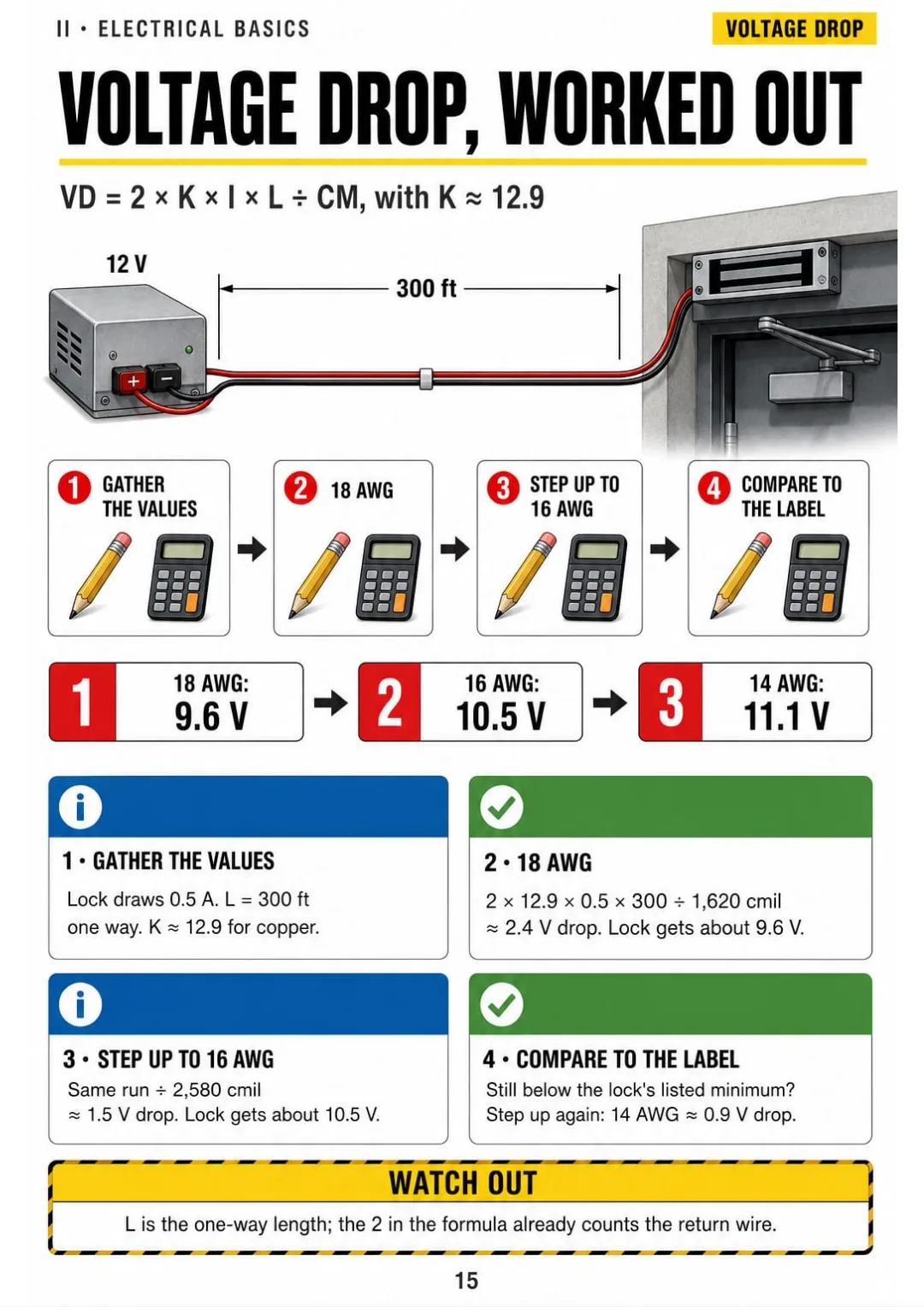
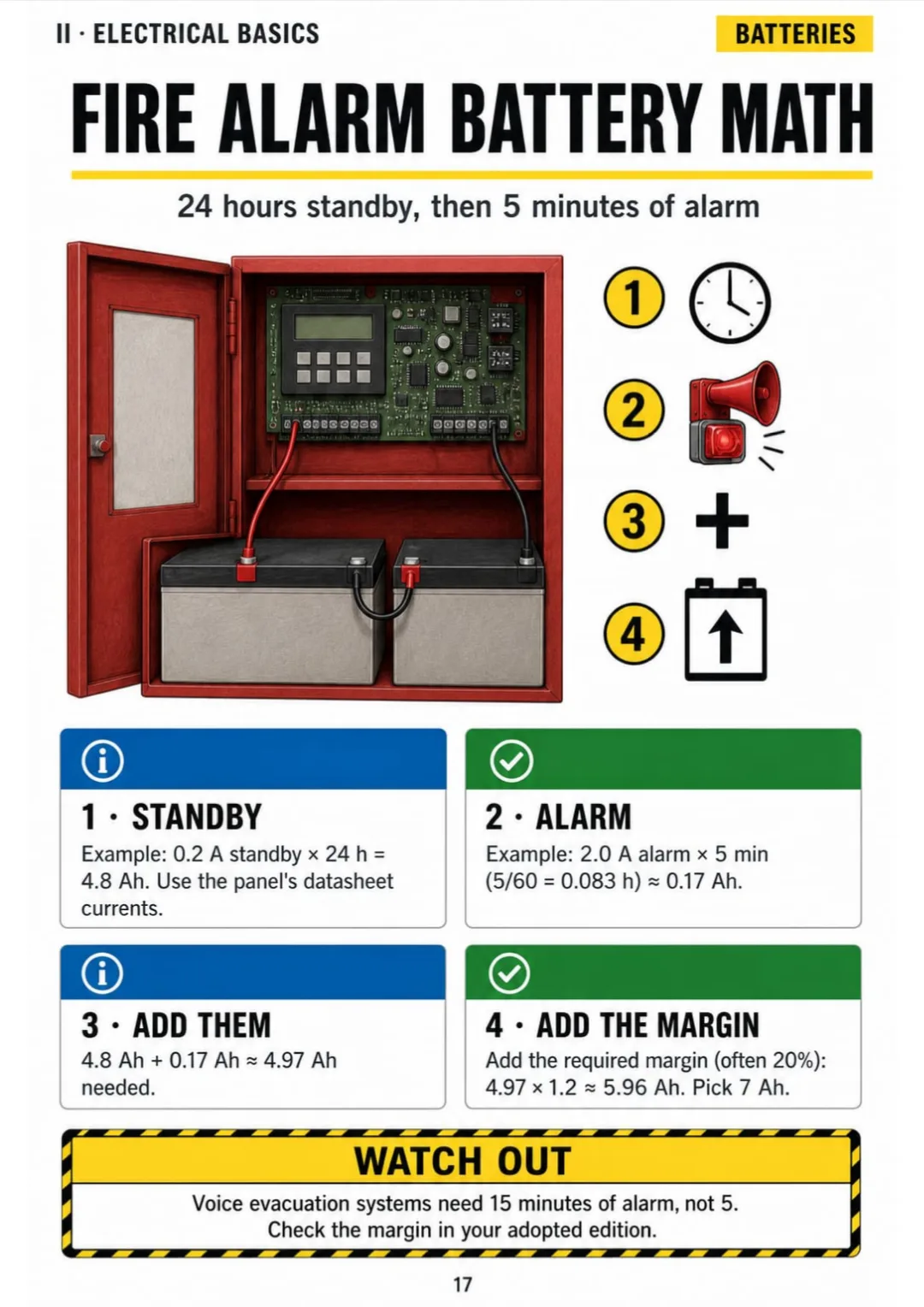
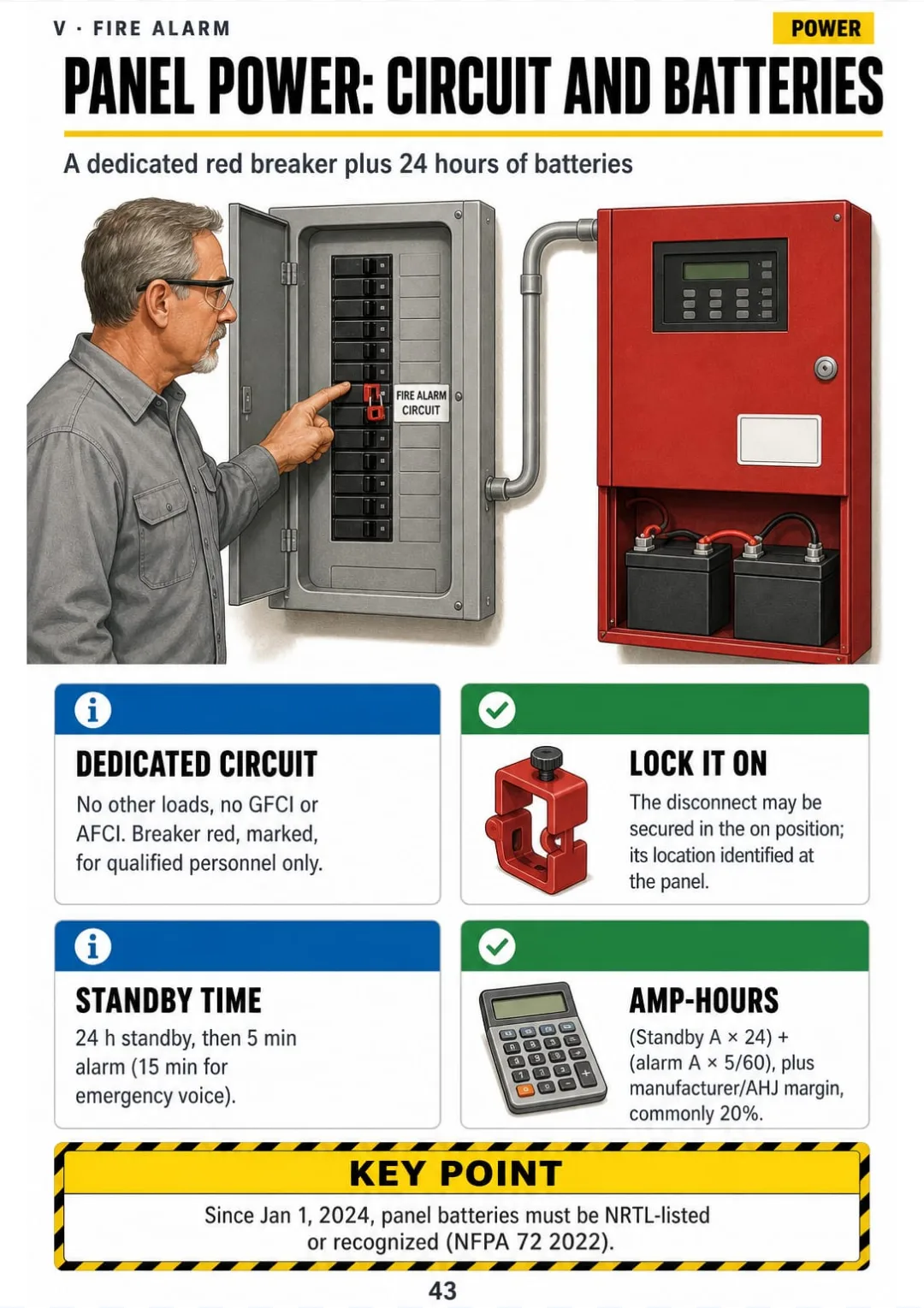
Ohm's law on one wheel, watts vs VA, series and parallel, AC vs DC, voltage drop, wire gauge and battery standby math, step by step.
Tell a Class 1, 2 or 3 circuit apart at a glance: the three side by side, Chapter 9 Tables 11(A) and 11(B), how to spot a Class 2 source, separation from line voltage, supporting cable, abandoned cable and firestopping.
Reading a cable jacket, the plenum-riser-general purpose ladder, what counts as a plenum, limited use cable, the substitution chart, outdoor runs, LP cable and fiber types.
A fire alarm system drawn whole, PLFA vs NPLFA, pathway classes, end-of-line devices, detectors, pull stations, horns and strobes, audibility, panel power and NAC voltage drop.
Chapter 8 in one drawing, grounding at the entrance, TIA-568 topology, T568A vs T568B, terminations, Category 5e to 6A, coax, fiber, testing and labeling.
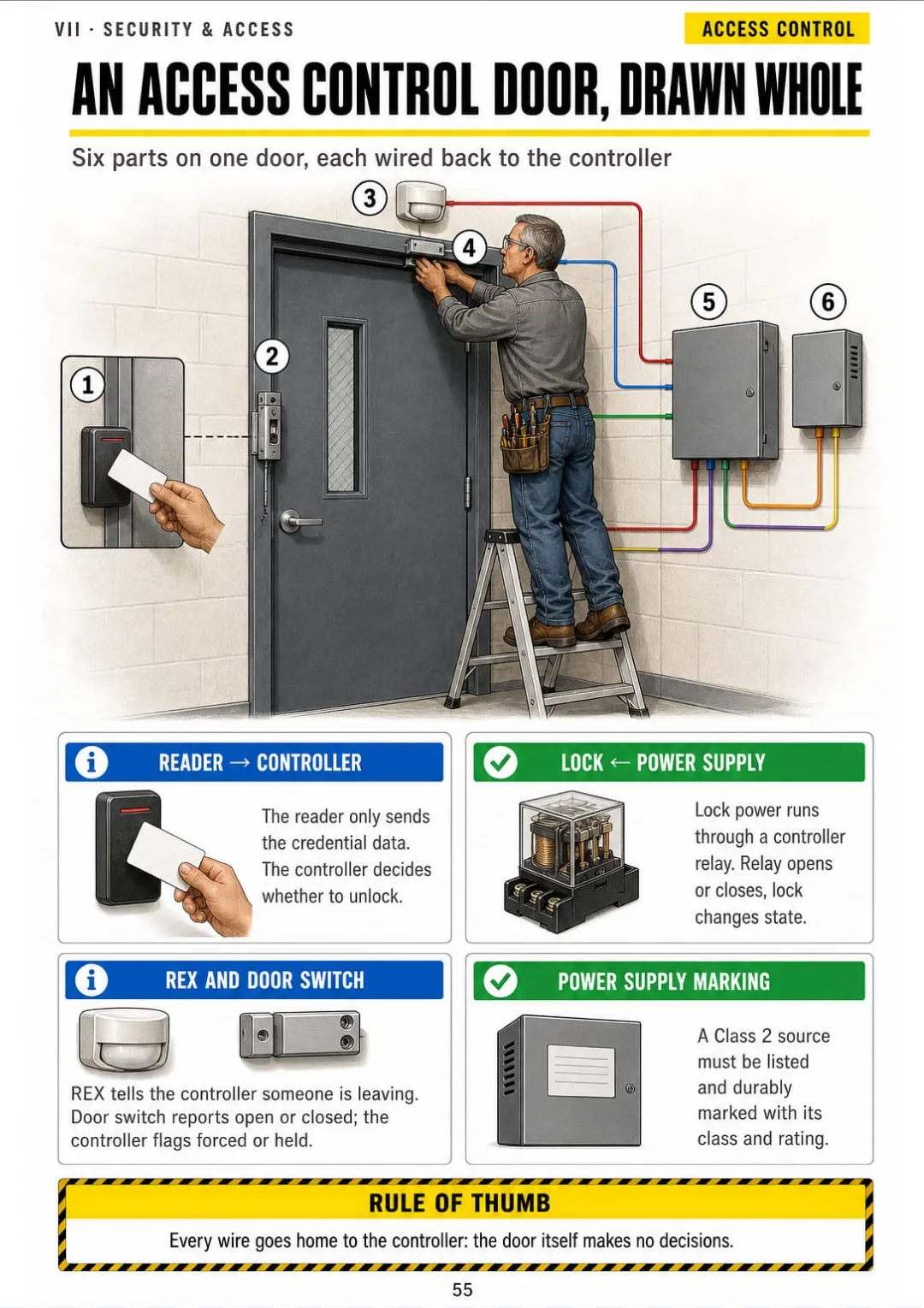
Intrusion zones, an access control door drawn whole, fail-safe vs fail-secure, maglock egress, CCTV power, PoE standards and heat, and audio and intercom on 70 V lines.
The numbers to know on one page, side-by-side mix-ups, fire alarm at a glance, exam-day strategy, mistakes the inspector writes up and a final checklist.
At the end of the book: A review section with the numbers to know, side-by-side mix-ups and a final checklist before the exam.
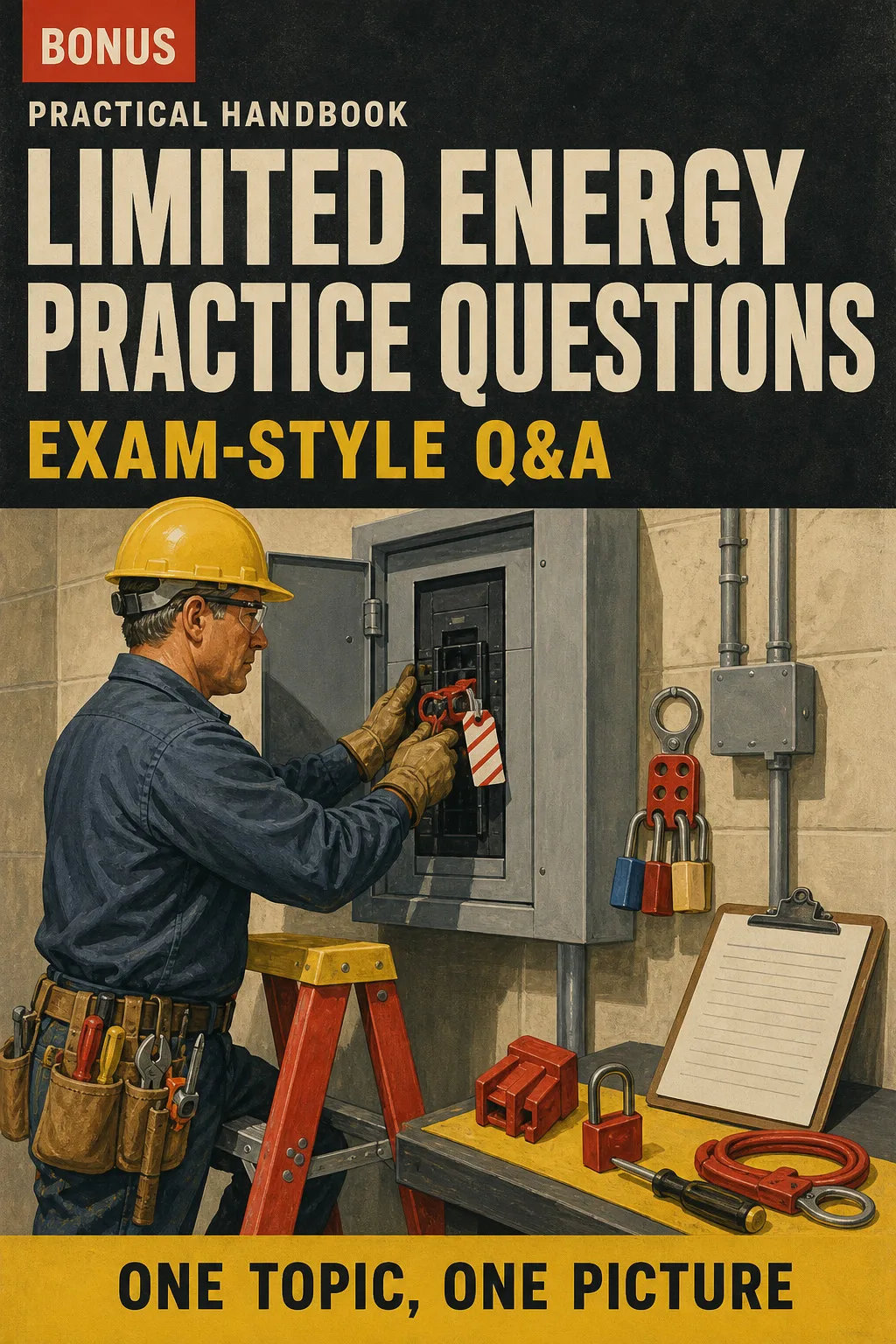
Test yourself with exam-style questions on circuit classes, fire alarm, cabling and code rules, each answer explained in a few lines with the page to go back to.

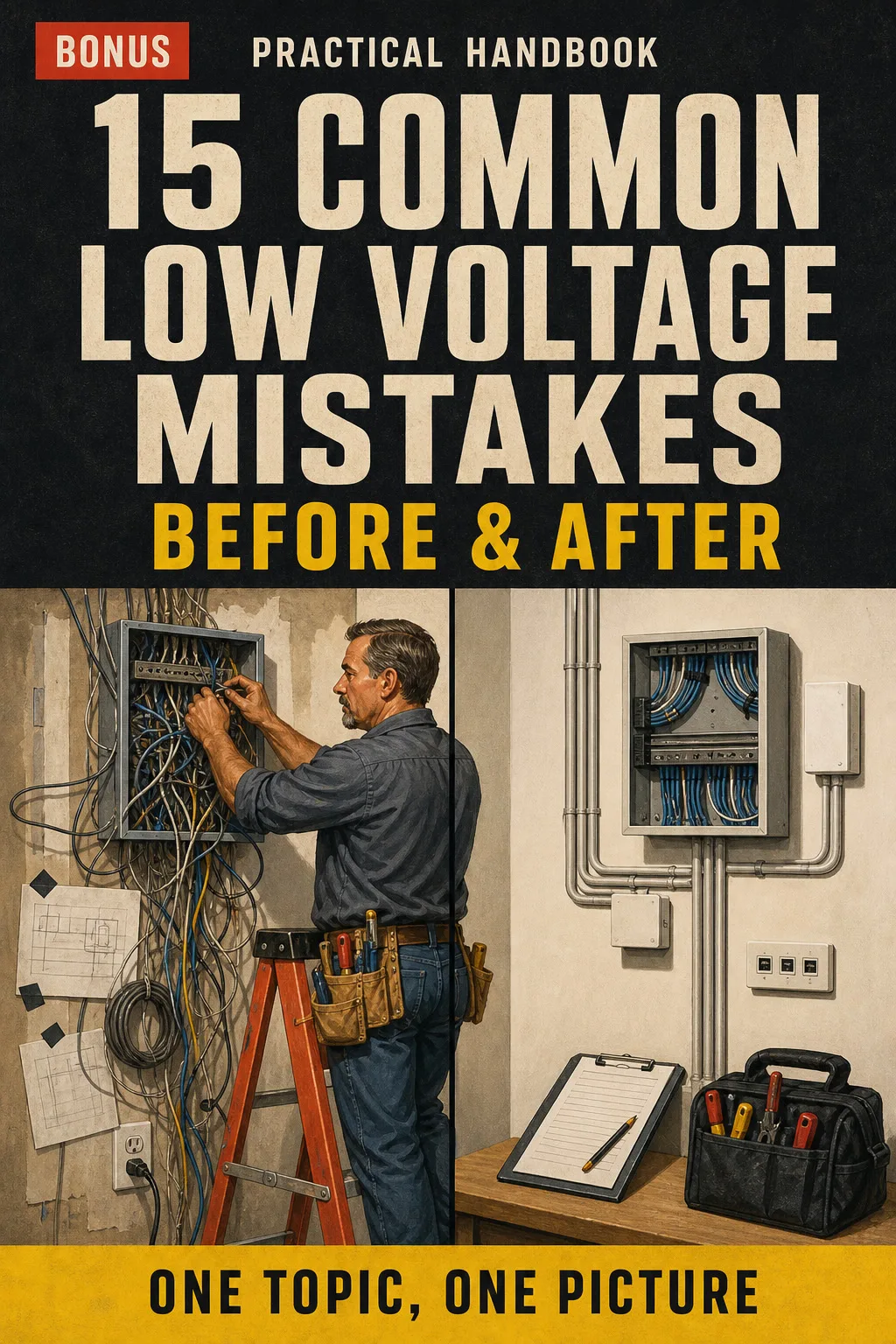
See the 15 most common installation and code mistakes drawn side by side with the right way, so you spot them on the job and on the exam.
📄 This is a digital PDF book sent to your email: nothing is printed or shipped.
PDF by email: We email you Low Voltage Electrician Illustrated as a PDF, together with the two free books. It's a single payment: no installments, no extra charges.
Each night you take one topic, see it drawn and read the code rule beside it. The circuit classes stop blurring together.
The review part puts the numbers, the mix-ups and fire alarm on a few pages, so you can go over everything in order the week before.
You know the work with your hands. The book links each system you install to the article behind it, so you can explain it to the inspector.
📄 This is a digital PDF book sent to your email: nothing is printed or shipped.
Try Low Voltage Electrician Illustrated for 30 days, bonus books included.
We refund everything if the file won't open, if the book isn't what you see here, if you were charged twice or if the email doesn't arrive. Just email us.
You pay once. No subscriptions.
Yes. It's built around the Washington Limited Energy (06) certificate, and most of it is NEC and NFPA 72 content that other state low voltage exams also use. It doesn't reteach your trade: it skips the hand skills and goes straight to the code rule, the table and the number behind each system you install. Check your state's exam scope and adopted NEC edition.
From the NEC 2023 (NFPA 70), NFPA 72-2022, the ANSI/TIA-568 and TIA-606 cabling standards, and Washington's electrical rules (RCW 19.28 and WAC 296-46B). If your exam still uses NEC 2020, one page shows where the 2023 edition moved things: Class 1 to Article 724, cable rules to Article 722. Numbers and distances are flagged so you can check them against your state's edition.
No. It's an illustrated study book. It isn't published or endorsed by the NFPA, Washington L&I or any state licensing board, and it doesn't give you a certificate or count as continuing education hours.
No. It helps you study and review, but it doesn't replace required training, supervised hours or the code book itself.
No. They are written for this book, in exam style, to help you test yourself. They are not official questions from any exam.
The book and the 2 bonus books arrive as PDFs by email, at the address you enter at checkout.
No. It's a one-time payment. No subscription.
Yes. The PDF is printable, so you can print it at home or at a print shop and keep it in the truck.
You have 30 days. We refund everything if the file won't open, if the book isn't what you see on this page, if you were charged twice or if the email doesn't arrive: just email us.
No more rereading code articles that don't stick.
Class 1, 2 and 3: you see them drawn, and you know.
You walk into the exam knowing where everything is.
Drawings make studying faster.
The book is right below.
One-time payment: US$ 27 · Guarantee: 30 days · PDF by email
YES, I WANT LOW VOLTAGE ELECTRICIAN ILLUSTRATED FOR US$ 27📄 This is a digital PDF book sent to your email: nothing is printed or shipped.